Peony Flower Coloring Page: A Designer's Asset
In the realm of visual design, the line between illustration and interactive element is beautifully blurred by a resource like a peony flower coloring page. Far from being a simple children's activity, this hand-drawn asset offers graphic designers, marketers, and creators a versatile tool for building brand identity, enhancing user engagement, and adding a layer of organic elegance to any project. Its value lies in its inherent simplicity and the creative potential it unlocks, serving as a foundational element that can be adapted across numerous applications.
The Strategic Value of Hand-Drawn Illustration
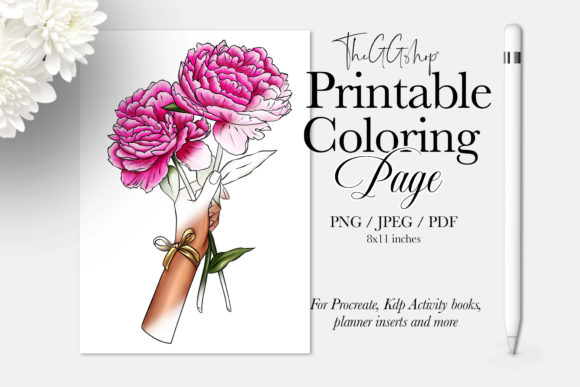
Unlike vector graphics generated with perfect, mathematical curves, a hand-drawn coloring page retains a human touch. This intentional imperfection, created without Bezier curves, communicates authenticity and craftsmanship—qualities that resonate deeply in modern branding. For a brand identity seeking to project warmth, femininity, or artisanal quality, incorporating such an element into a logo design or social media graphics can create an immediate emotional connection with the audience. The closed-line design of this particular asset is a technical advantage, ensuring seamless compatibility with digital coloring tools and simplifying the process for designers working in software like Procreate or Adobe Illustrator.
Practical Applications Across Design Disciplines
The true power of a creative asset like this is its adaptability. Here’s how it can be strategically deployed:
- Brand Identity & Packaging Design: Use the peony motif as a central visual in packaging for cosmetics, stationery, or boutique goods. Its elegant form works perfectly for labels, box art, or tissue paper prints, reinforcing a sophisticated color palette and brand story.
- Marketing & Social Media Graphics: Create engaging content by offering the coloring page as a free download for your community. This fosters interaction, builds your email list, and provides value beyond a standard promotional post. It can also be used as a background texture for quotes or announcements.
- Editorial & Web Design: In editorial layouts or website UI design, the peony can serve as a decorative header, a section divider, or a watermark. It adds visual hierarchy and a touch of nature-inspired calm, improving the overall user experience.
- Digital Products & Merchandise: This asset is ready for direct use in creating printable art, digital planners, or merchandise like tote bags and mugs. The high-resolution 300 DPI files ensure professional print quality.
Integrating Assets into a Cohesive Design Workflow
When selecting any design element, consistency is key. Evaluate how the peony illustration’s style—its line weight, level of detail, and overall aesthetic—aligns with your existing brand systems. Consider its scalability; will it remain impactful when sized down for a favicon or blown up for a poster? The provided PNG and JPEG formats offer flexibility for both digital and print design. Use the transparent PNG for layering in complex compositions, or the JPEG for straightforward placement on white backgrounds. Remember, the goal is to enhance your visual communication, not overwhelm it. The peony should complement your typography and core message, contributing to a polished and professional presentation.
Thoughtful design is about making intentional choices that serve both form and function. Integrating a high-quality, versatile asset like a hand-drawn floral element elevates a project from merely visual to truly communicative, ensuring your creative work leaves a lasting and beautiful impression.